






Camí del Coll d'Ares, s/n25691 Àger, Lleida
View on google mapsSegueix-nos

WHAT ARE YOU GOING TO SEARCH?
Meet The Astronomer
 Watch video
 Who are We
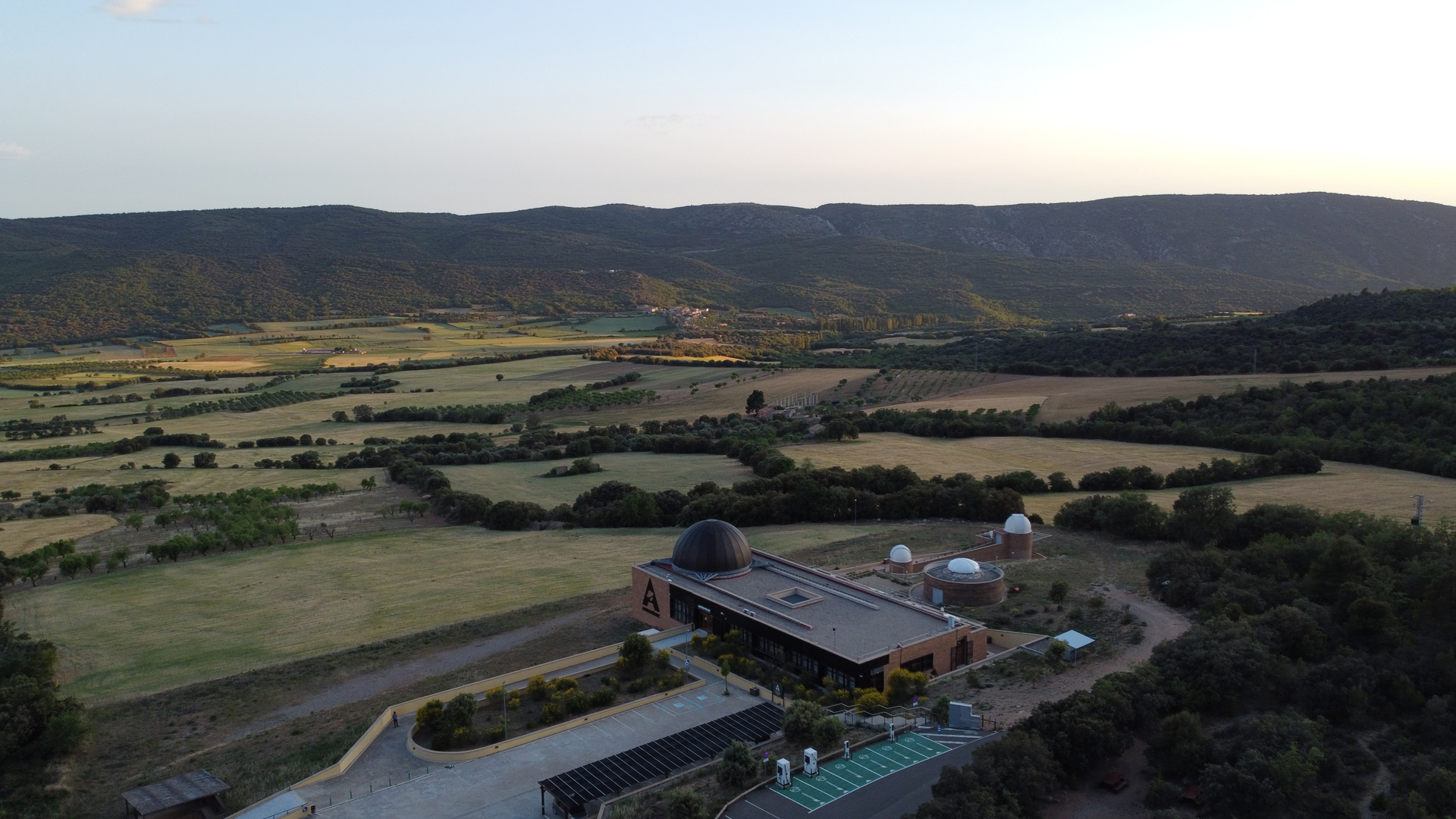
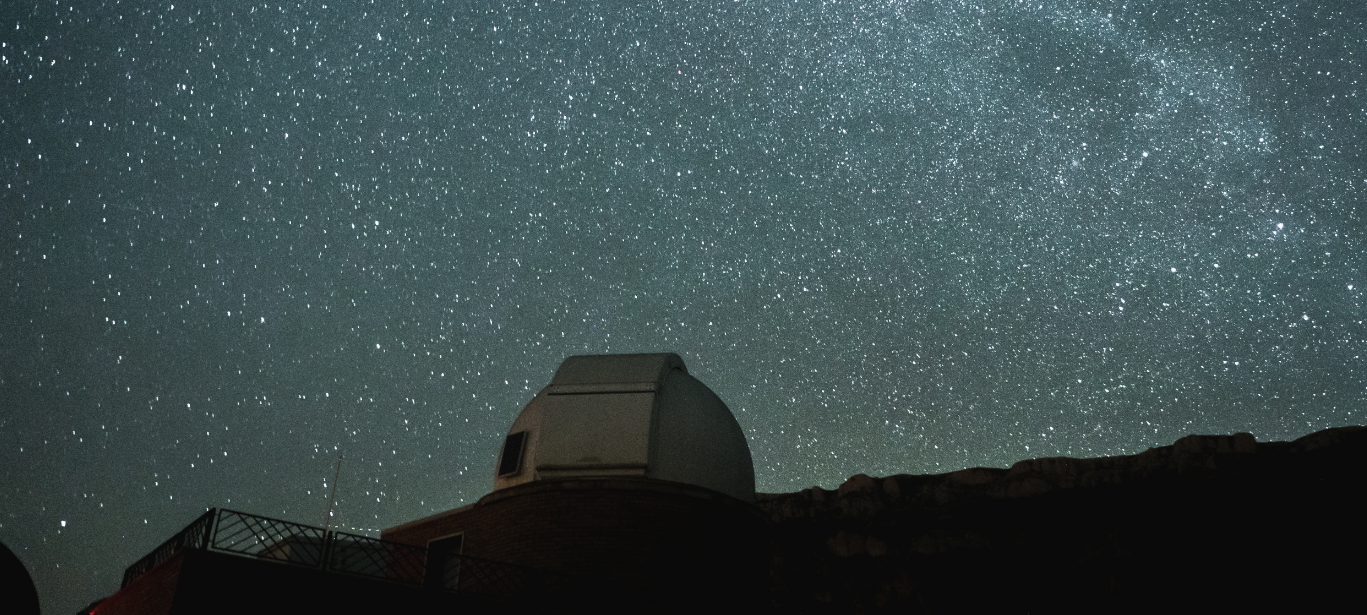
The Montsec Astronomical Park is located in the municipality of Àger, in the region of La Noguera, in an extraordinary location considered the best place for observing the sky in Catalonia. The low precipitation in the form of rain, the little light pollution and the height, make the Serra del Montsec the ideal place for the installation of a center of world reference in matters of astronomy.
The park brings science closer to the public to make known the greatness of a night sky with extraordinary characteristics that allows us to discover the secrets of the universe. For this reason, it is considered the most important astronomy facility in Catalonia, which also becomes a point of reference in the teaching and dissemination of the sciences of space and the universe.
The Montsec Astronomical Park offers numerous activities in the middle of nature for all audiences, both day and night, aimed at universities, schools but also at a basic informative level for families, fans, etc.
Facilities
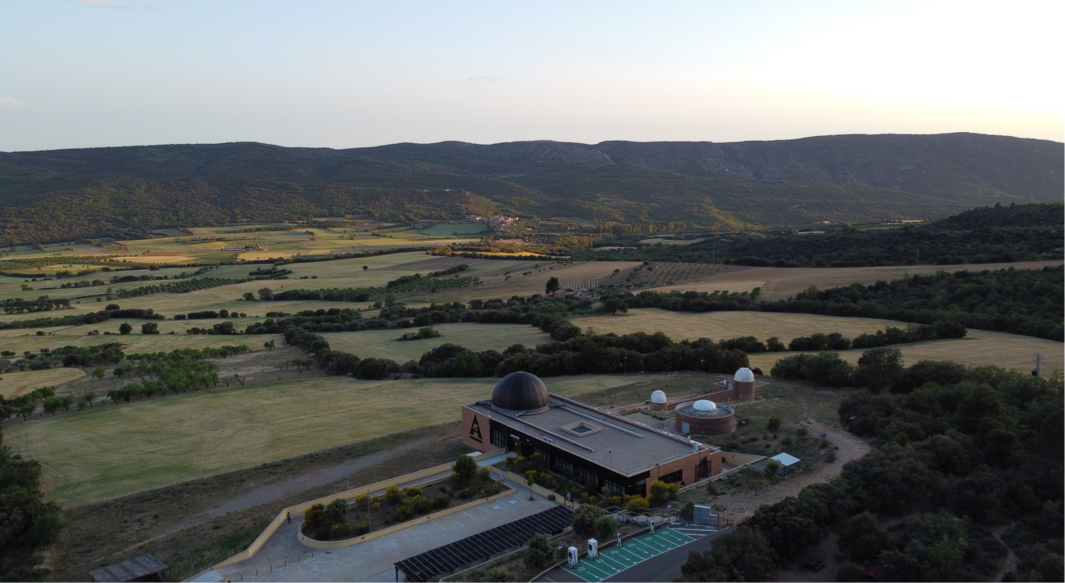
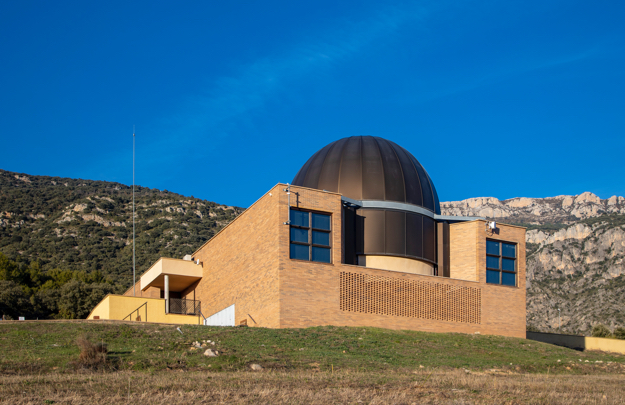
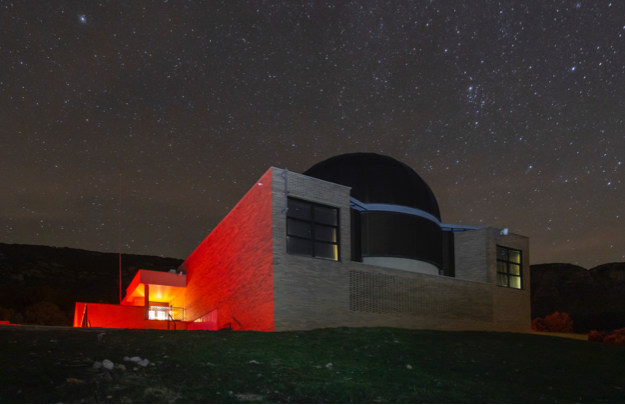
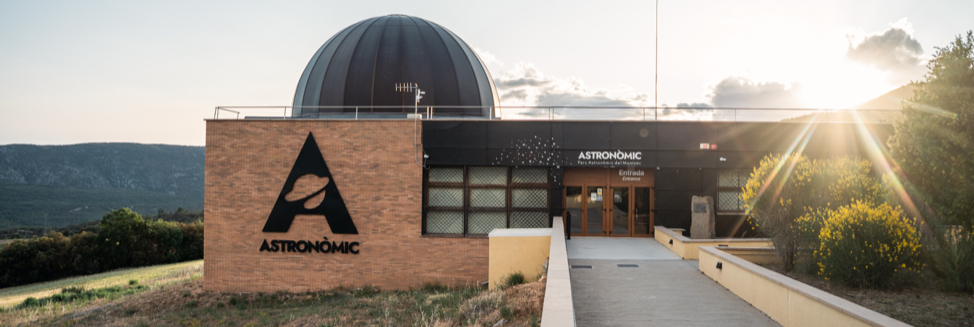
The Montsec Astronomical Park consists of three main structures, 2 permanent exhibition halls and 1 temporary exhibition hall.
Central Building
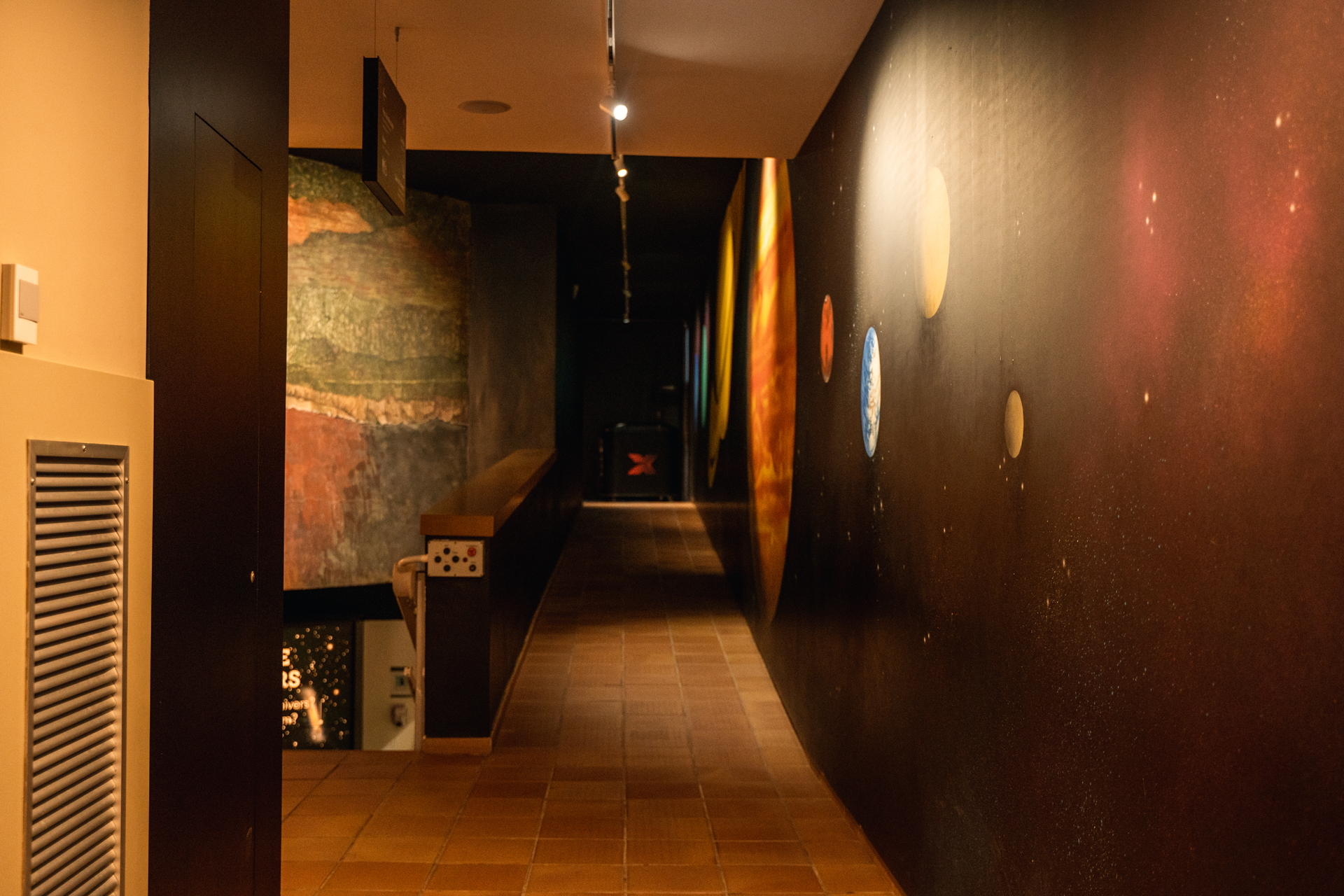
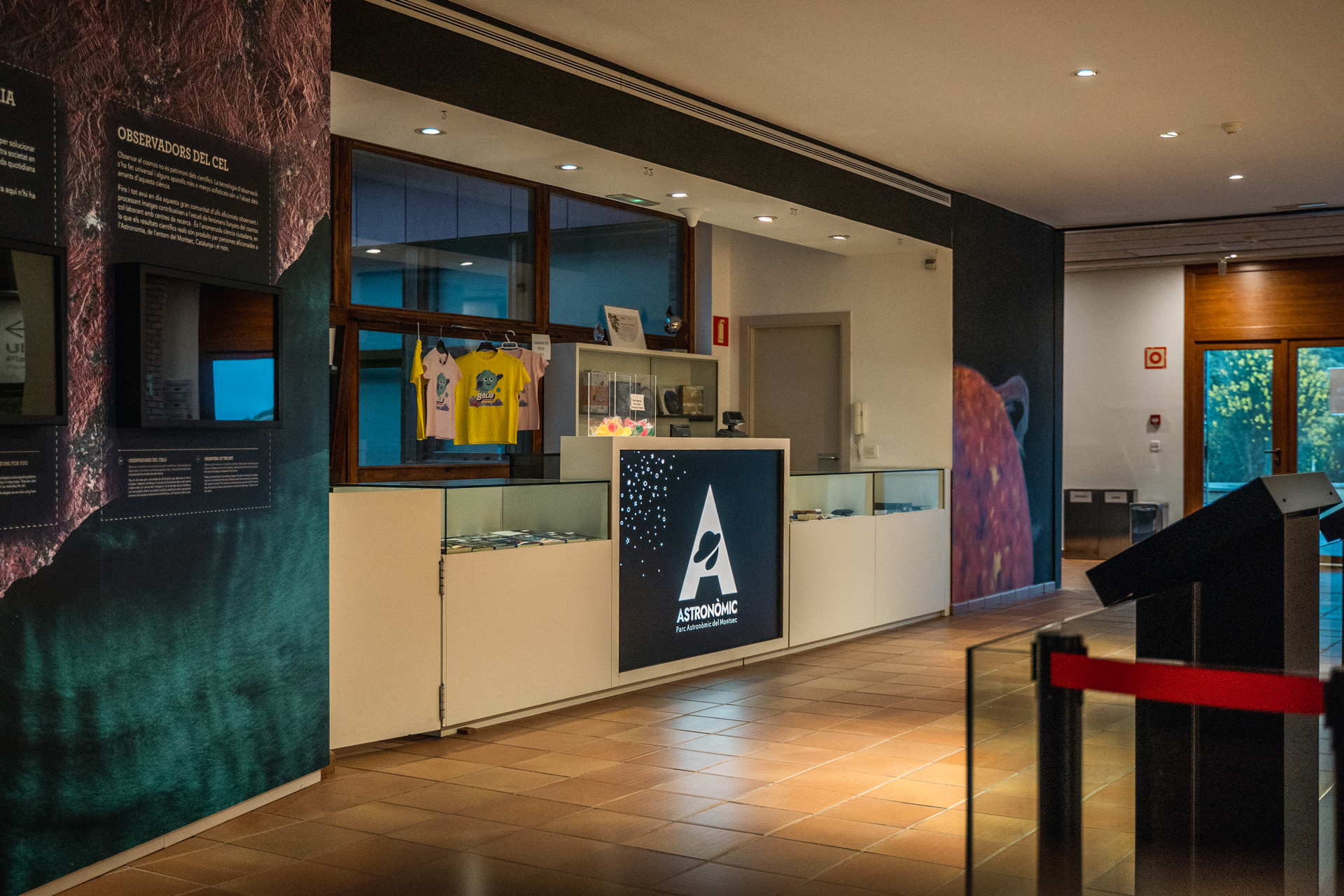
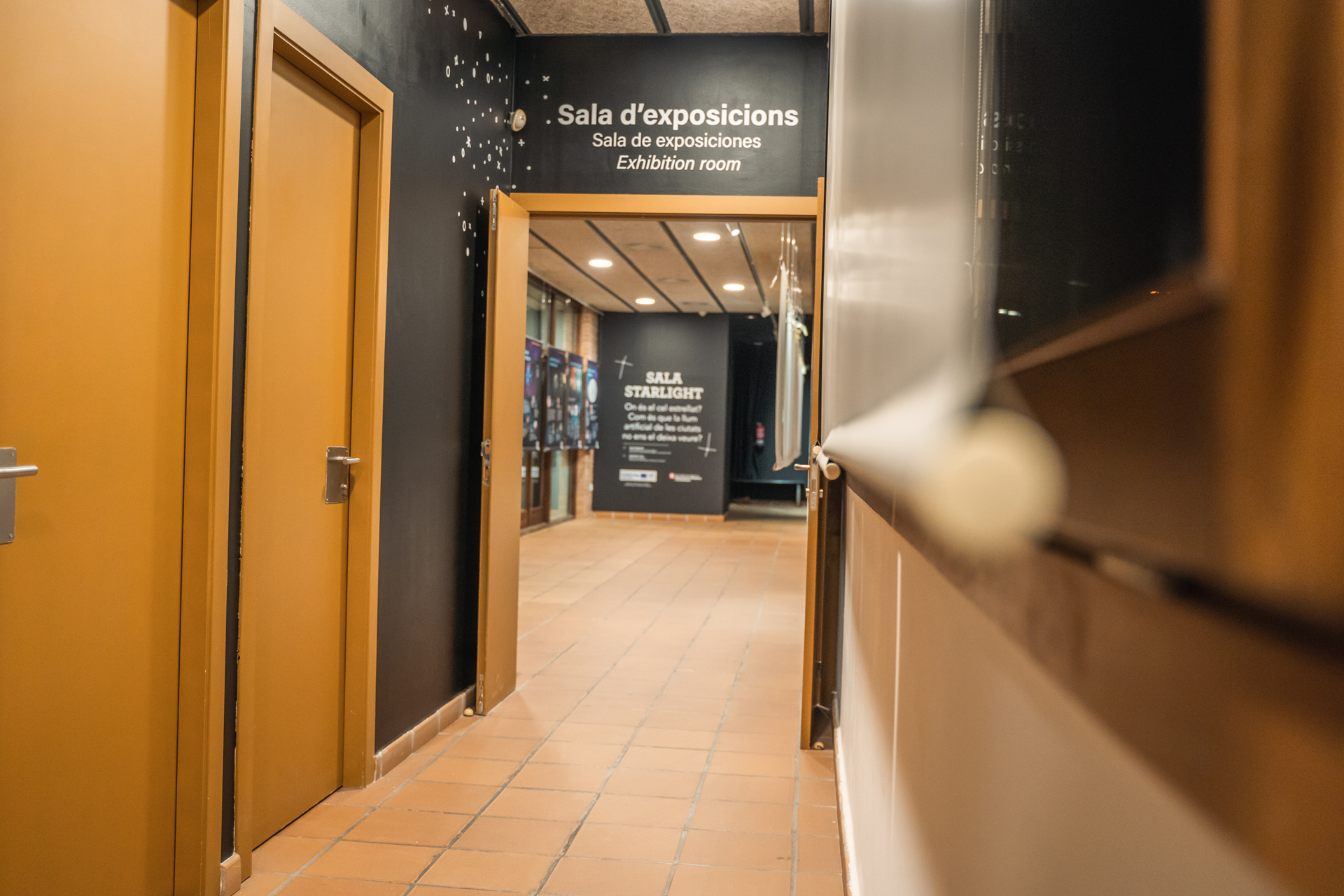
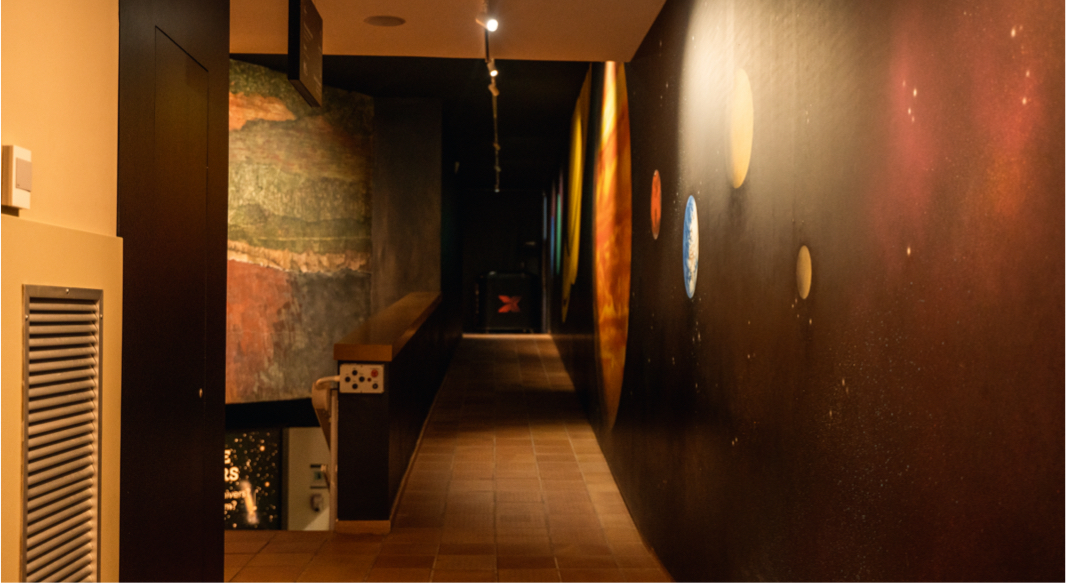
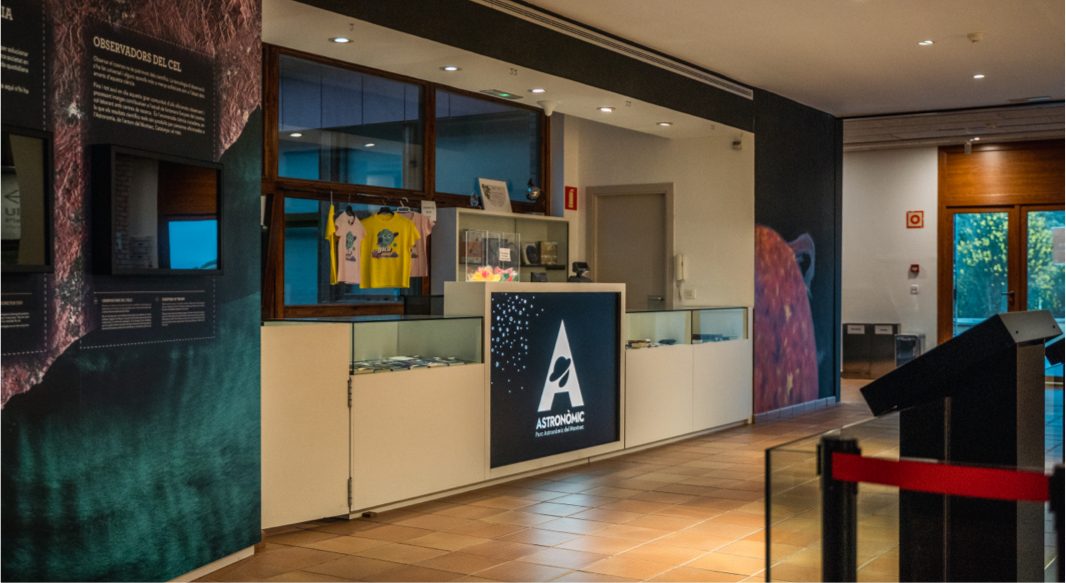
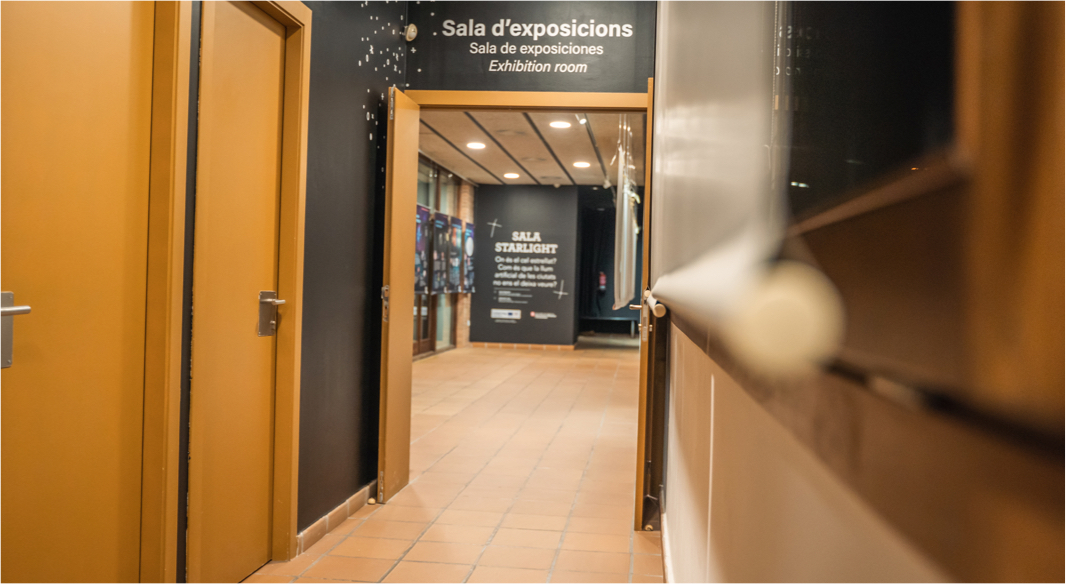
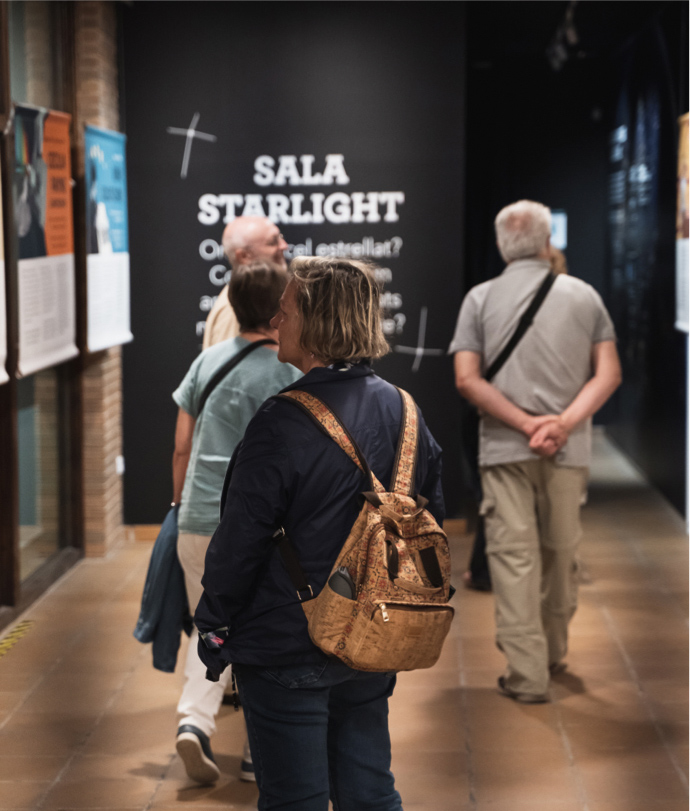
The Central Building of The Montsec Astronomical Park hosts the interactive permanent exhibition dedicated to astronomy and space sciences. The exhibition is divided into three spaces. It begins with the reception area dedicated to the Astronomical Park and the role of astronomy in society. The second space is the Sala de l’Univers, a journey from the origin of the universe to the most recent discoveries. The final area is the Starlight Room, dedicated to protecting the night sky from light pollution.
The Eye of Montsec
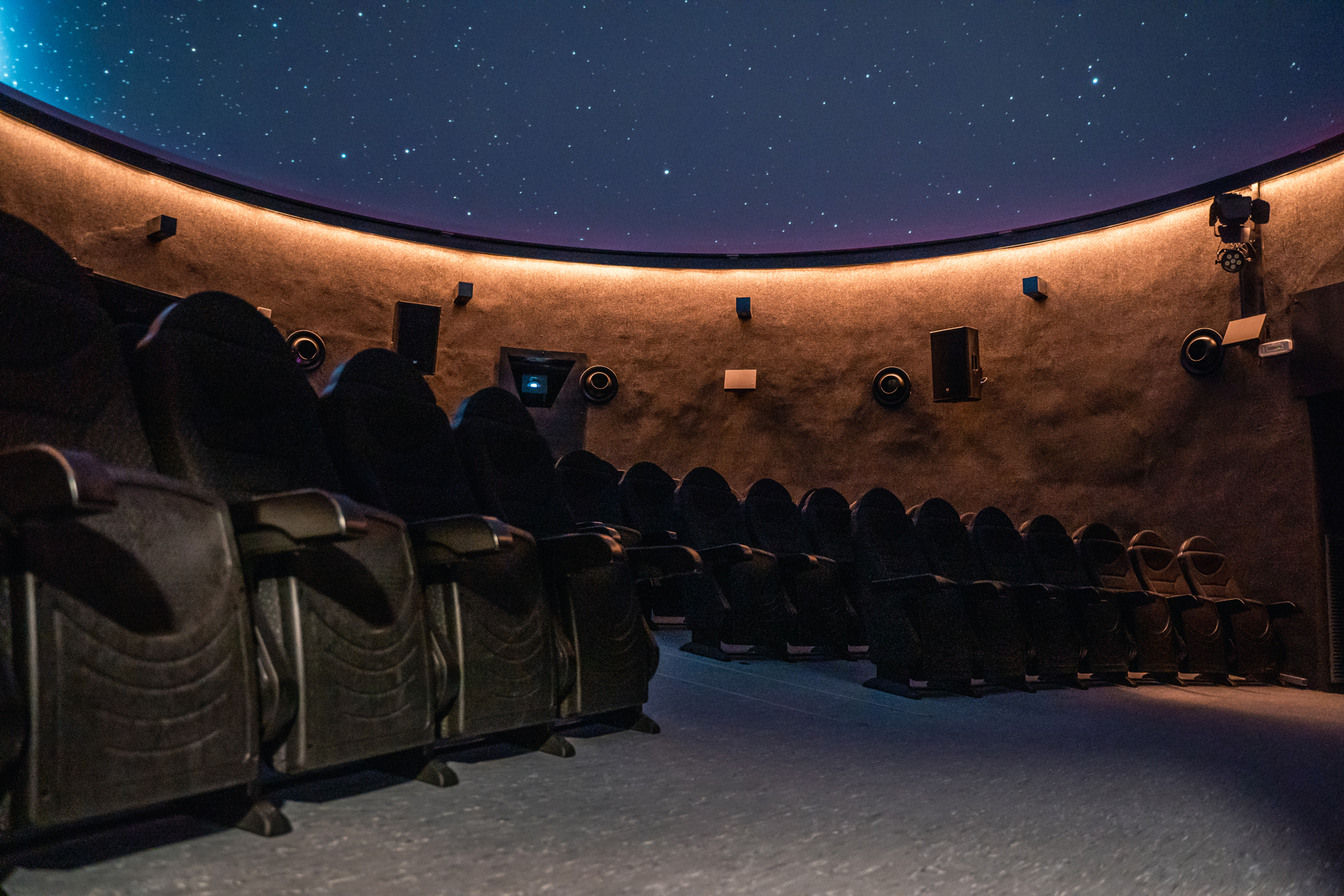
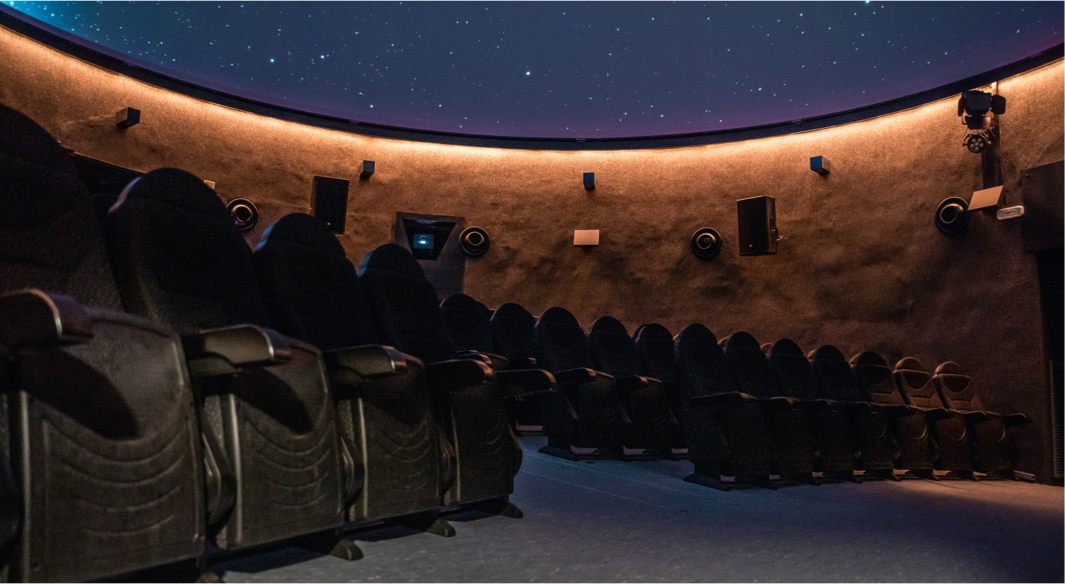
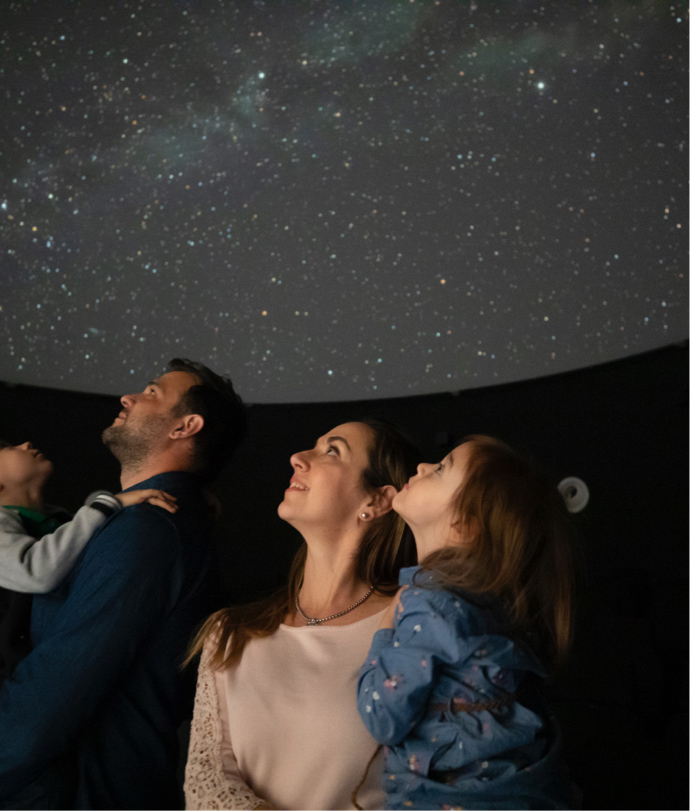
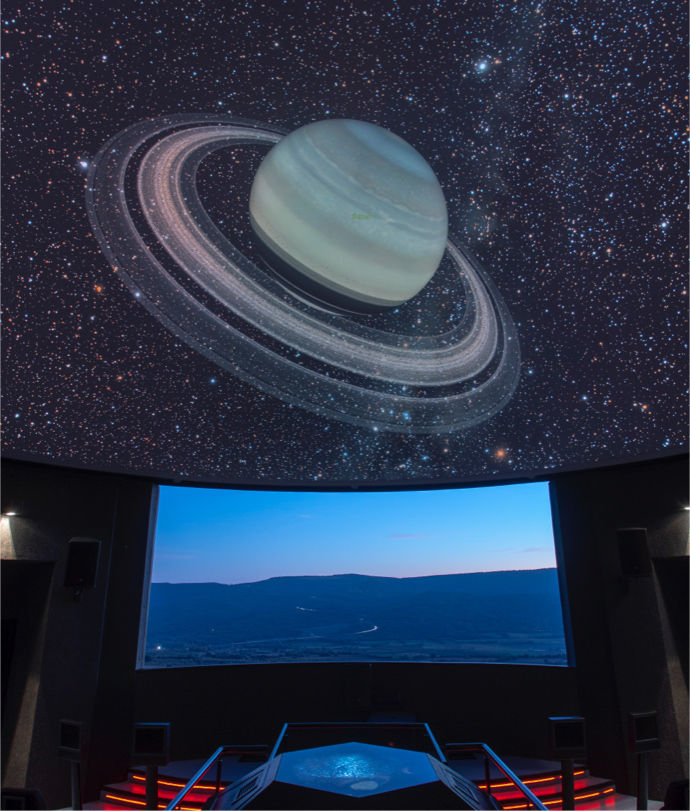
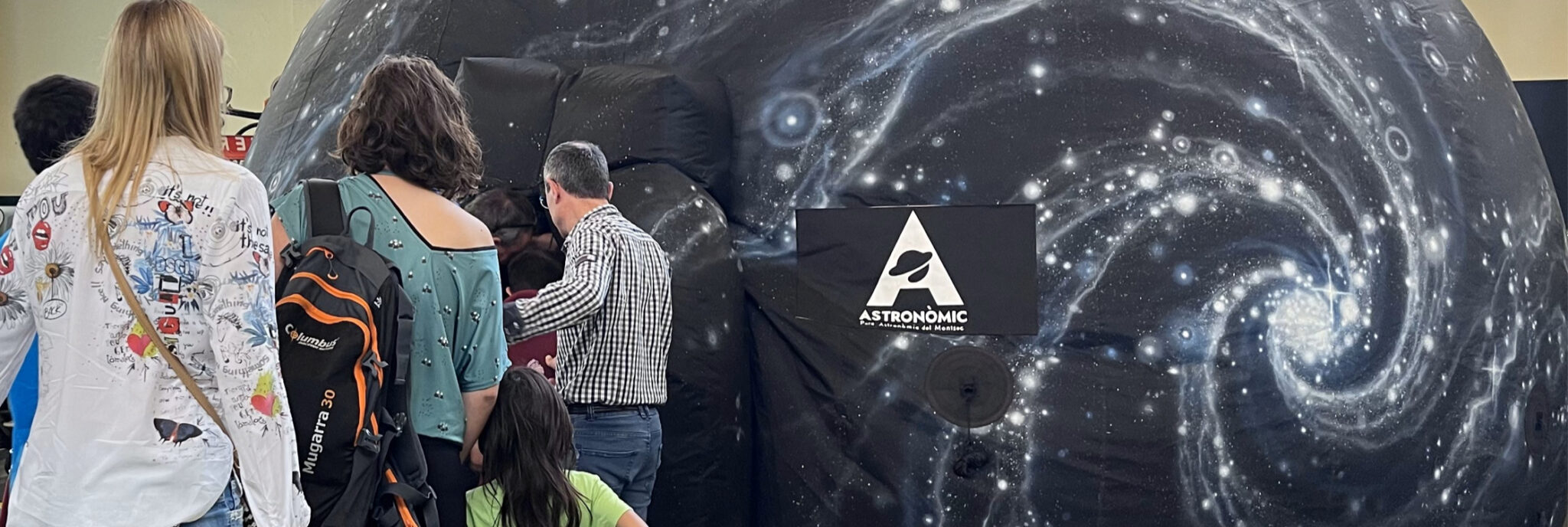
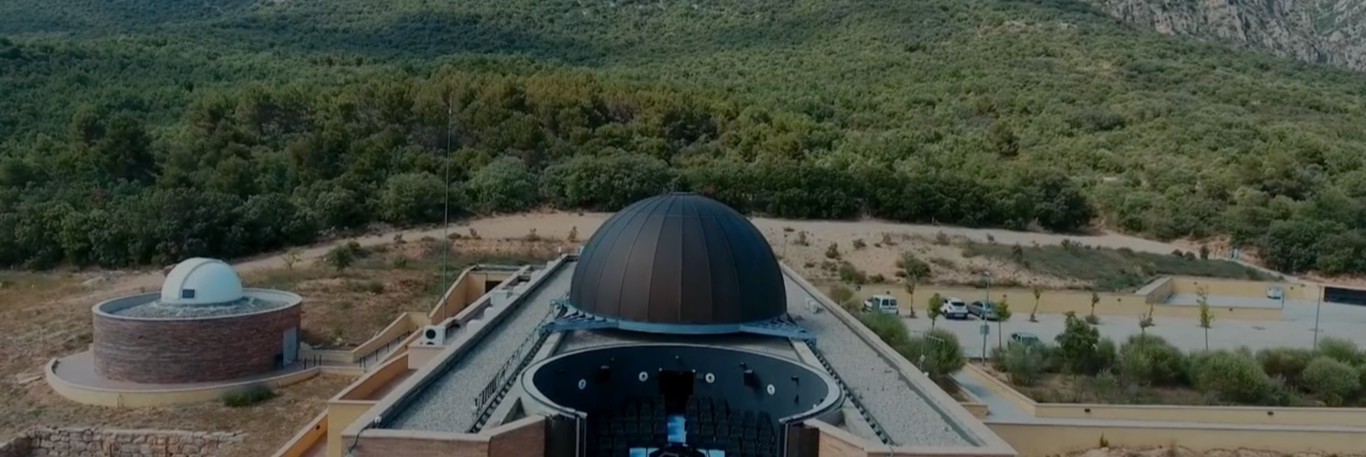
The Eye of Montsec is a unique installation in the world. It consists of a digital planetarium equipped with a 3D full dome (or complete dome) projection system that allows the recreation of both the current sky and that of any past era. Furthermore, films can be projected in full-dome format onto the 12-meter diameter dome to show visitors aspects that go beyond the purely astronomical.
This equipment is also a platform for live sky observation. Its dome and front wall open completely, placing visitors under the spectacular Montsec sky.
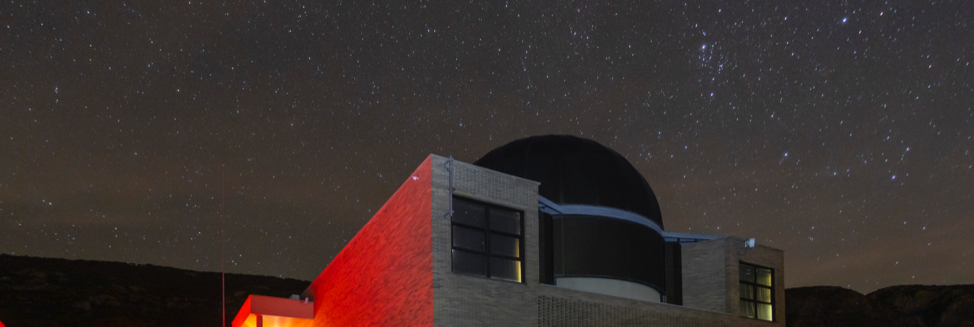
The Telescope Park
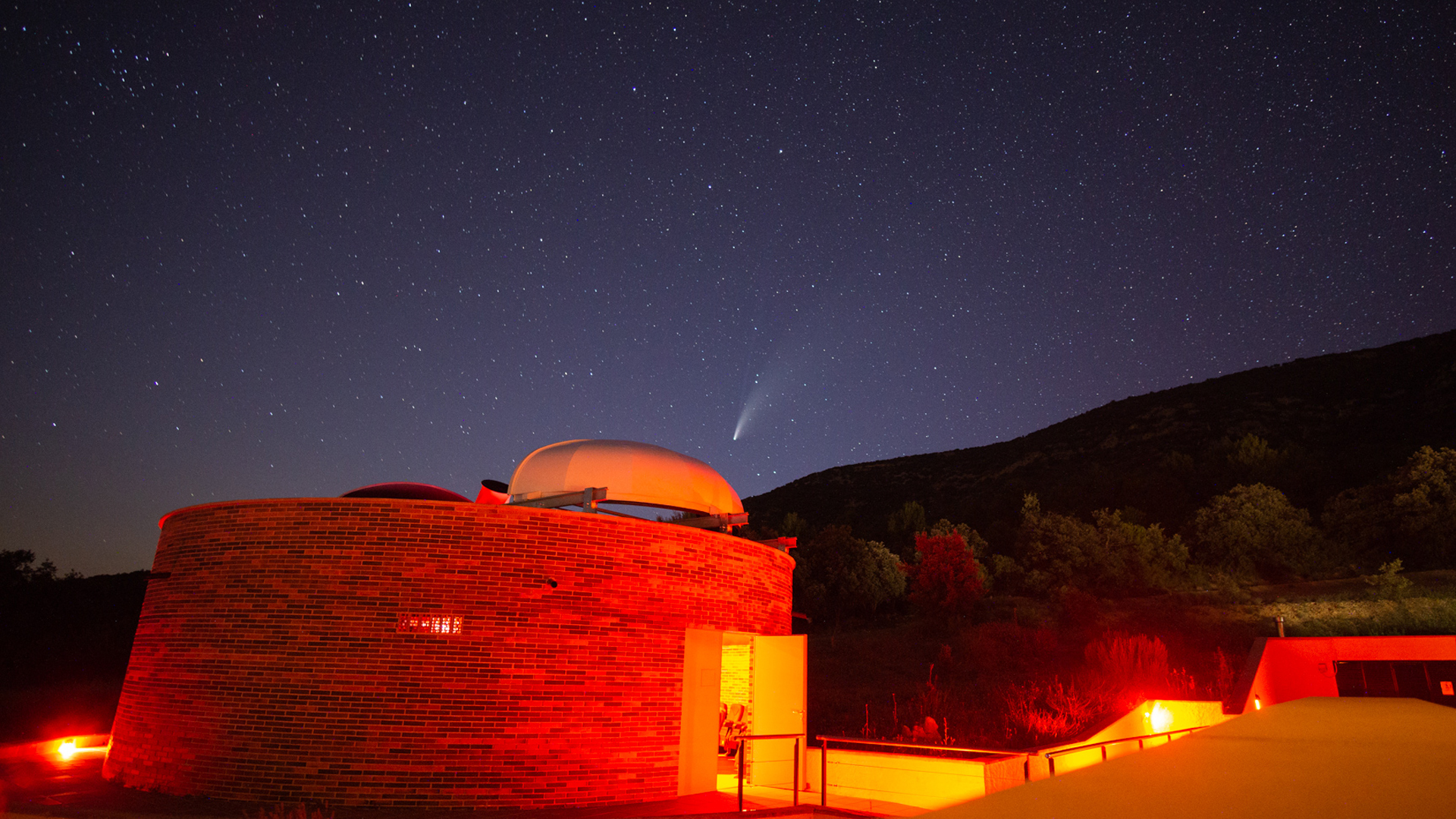
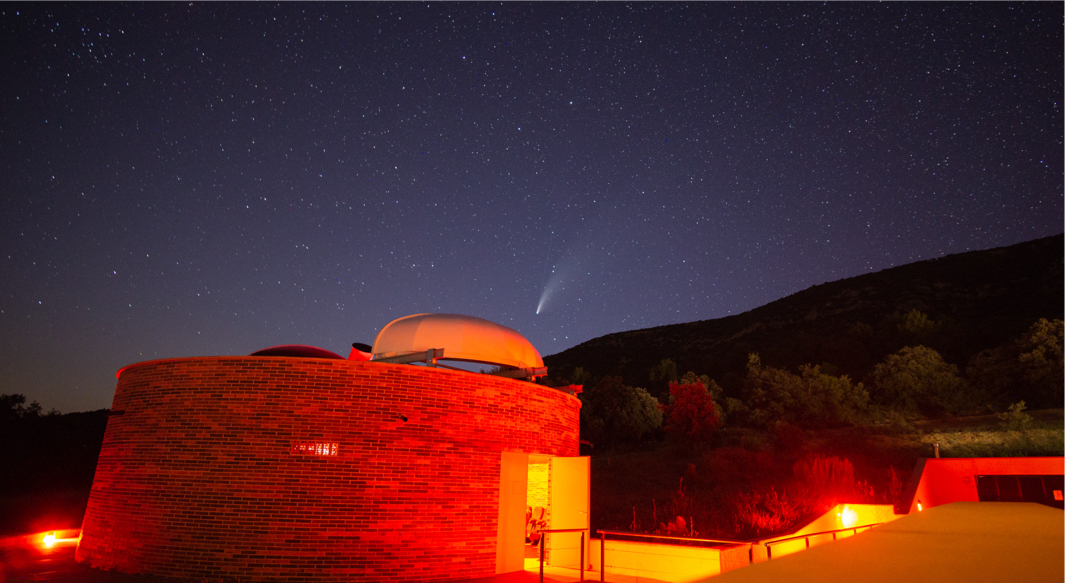
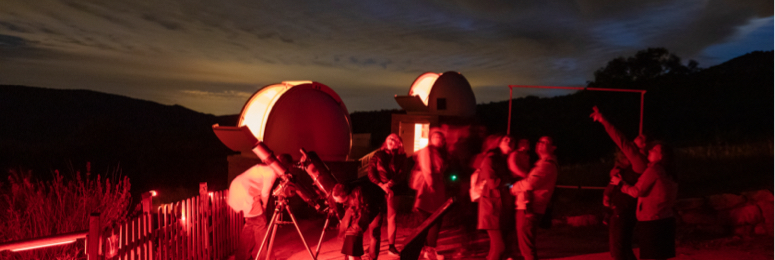
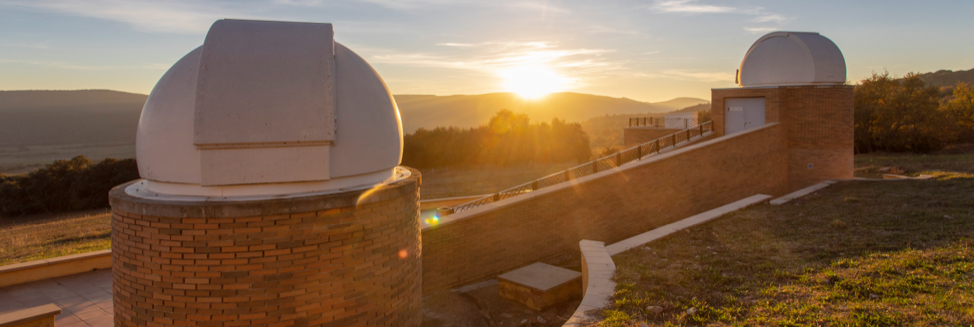
It is the space reserved for observing the firmament, both at night and during the day. It is made up of three buildings with astronomical domes and space for the installation of the Montsec Astronomical Park portable telescopes.
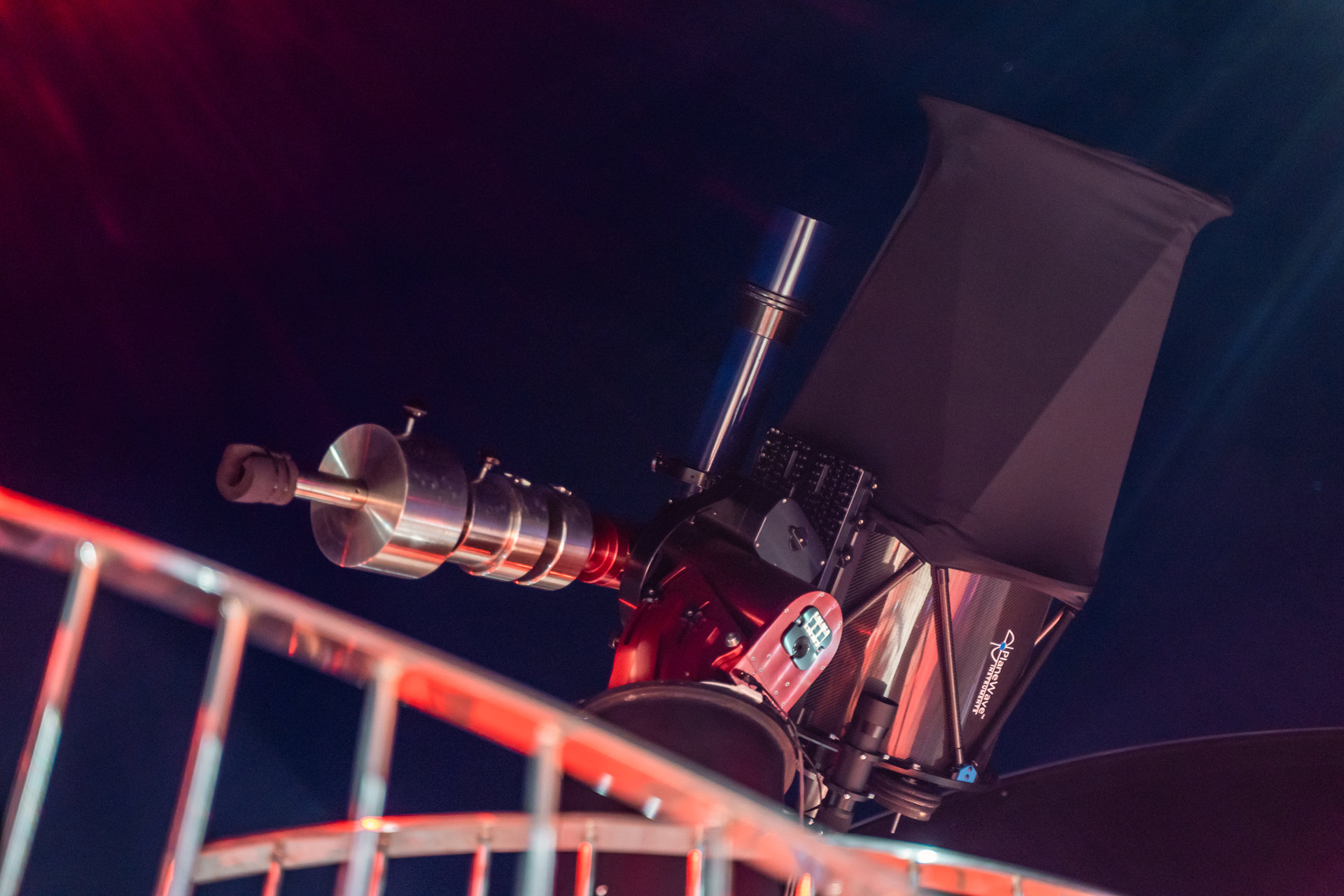
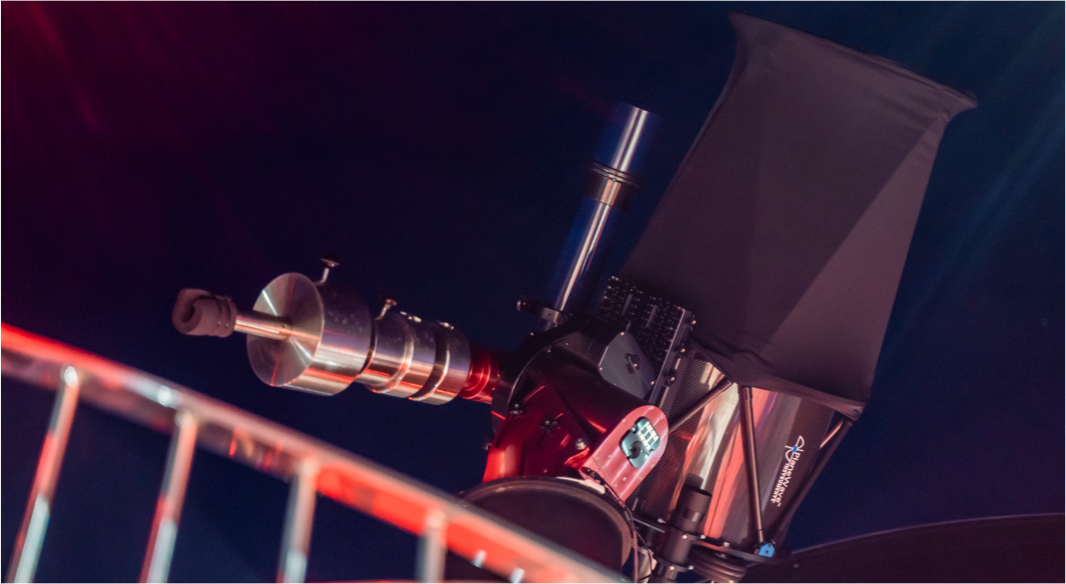
- A Dall-Kirkham configuration catadioptric telescope of 50 centimeters in diameter called Assumpció Català, located in the new Observatory-Aula. A new space that combines observatory functions with space enabled for 84 seated people to enjoy astronomical observation. This telescope is fully automated and contains the necessary equipment to obtain high-quality astronomical images.
- A catadioptric telescope of Schmidt-Cassegrain configuration of 40 centimeters in diameter, located in the Great Dome. This fully automated telescope is complete with the necessary equipment to obtain high-quality astronomical images.
- A refracting telescope of 15 centimeters in diameter and very high optical quality, located in the Small Dome. This exceptional telescope is complete with the necessary equipment to obtain high-quality astronomical images and with the most advanced equipment to allow the observation of the Sun with a telescope.
- A celostat. This device consists of a system for monitoring and obtaining real-time images of the Sun. These images are automatically projected on the ground floor of the Great Dome, allowing the observation of a solar disk of more than one meter in diameter.
- A set of portable telescopes with their accessories, made up of more than 20 devices of various optical types: refractors, Newton reflectors and catadioptrics. They will allow nighttime visitors to the Montsec Astronomical Park to get as close as possible to observing the sky.
Universe Room
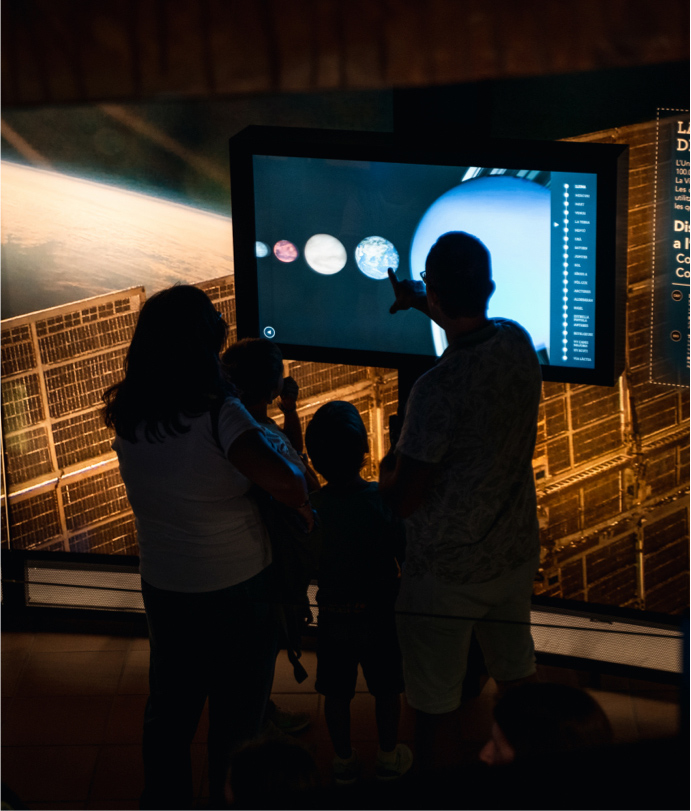
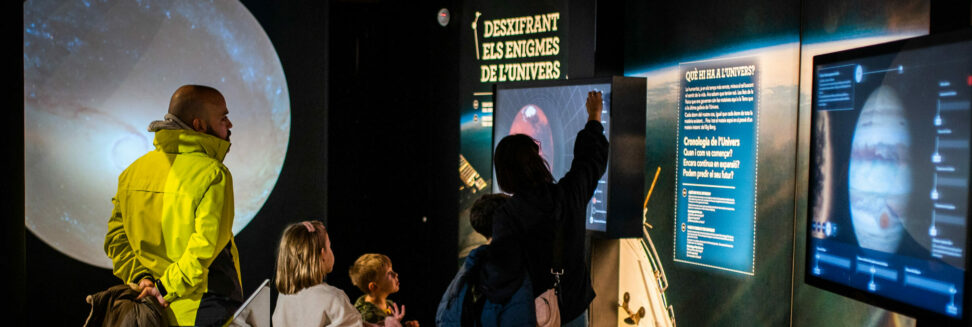
In this room we will discover the different elements that make up the universe and how astronomers can observe them through the different types of light that reach us from space. Throughout this interactive journey, using touchscreens, we will travel from the origin of the universe to the most recent discoveries, gain a better understanding of its immense dimensions, and explore what a planet must be like to support life.
Starlight Room
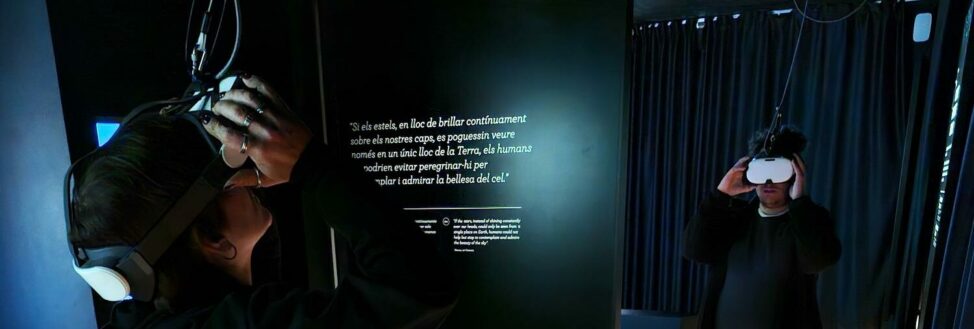
In this room, we will discover, through various interactive elements, how to protect the night sky from light pollution. We will learn how to illuminate a town or city to preserve a dark sky, discover where the darkest skies in the world are located, and distinguish between different types of skies through videos. We can even experience, with virtual reality glasses, how this pollution affects the way we observe the night sky.
EQUIPMENT
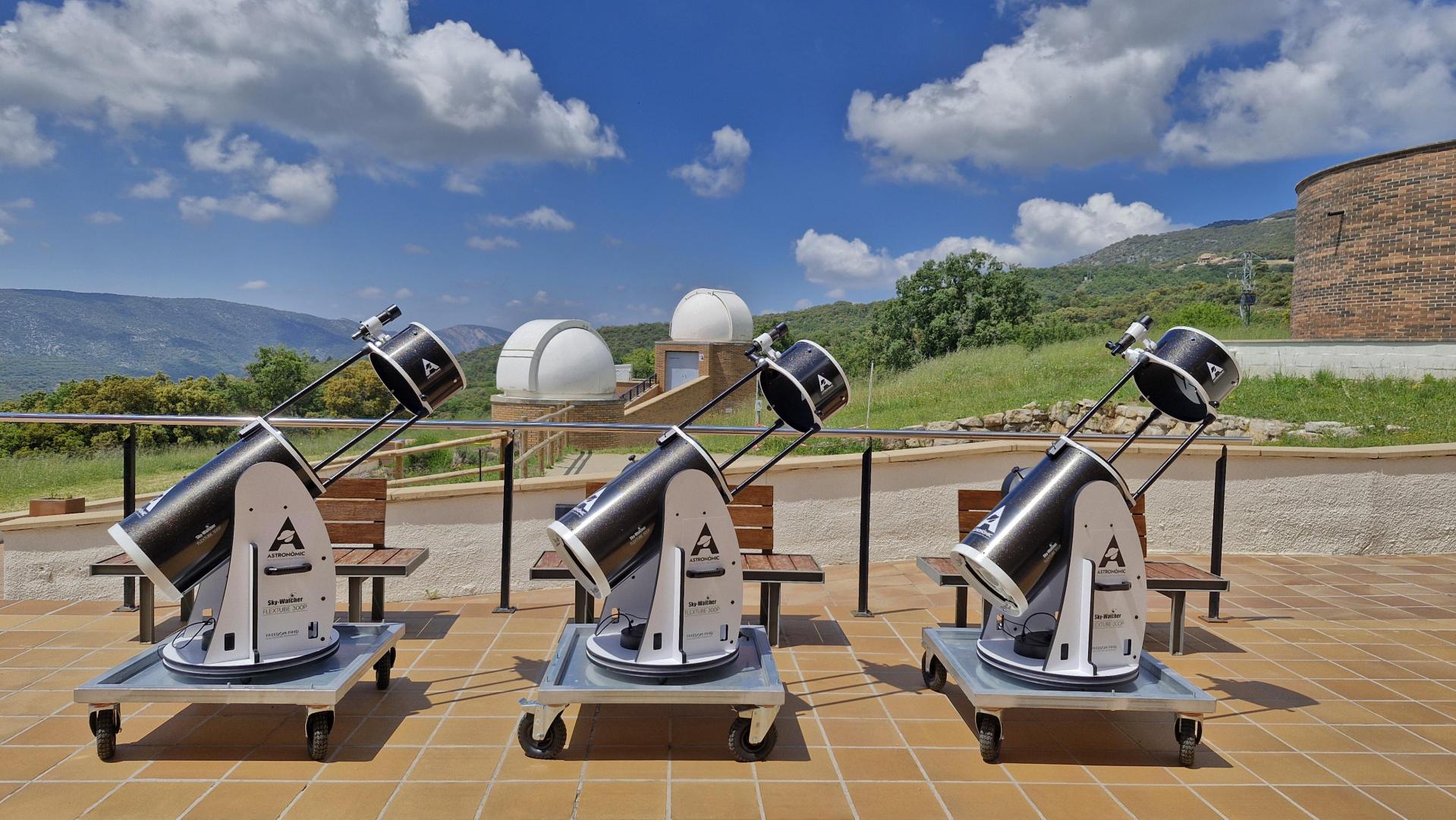
Dobson Telescopes
Dobsonian telescopes are portable telescopes used for visual observation. With them, visitors can look through the eyepiece to view planets, the moon, double stars, or bright nebulae.
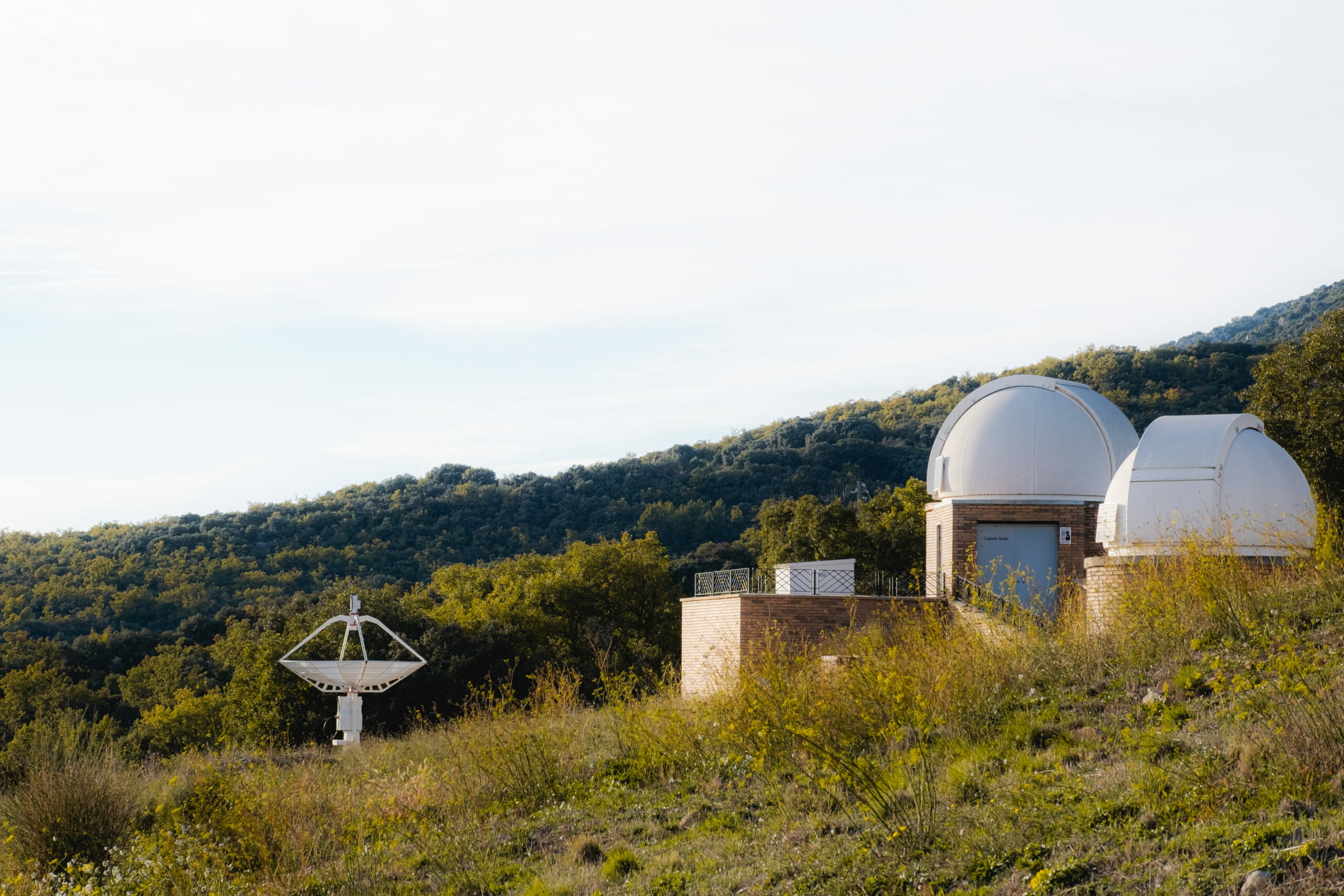
Radio telescope
This type of telescope allows the observation of a type of light that our eyes cannot see: radio waves. Human eyes perceive visible light (or white light) emitted by the Sun, stars, galaxies, and other objects in the universe. Radio waves, however, are invisible to the naked eye and must be detected using radio telescopes.
Observing the sky of Montsec: Starlight Reserve
Three seasons ago, the Montsec Astronomical Park unanimously won the 2020 Starlight Award in the category of Education and Outreach in Astronomy and Dark Sky Science. This award complements its Platinum Dark Sky Ambassador status from the International Astronomical Union, which it received in 2019. Furthermore, the Montsec mountain range was the second place in the world to receive the dual certification of Starlight Reserve and Starlight Tourist Destination in 2013, a designation endorsed by UNESCO.
The Park enjoys widespread international recognition thanks to the research conducted at the center. Therefore, this season, it is once again focusing its efforts on protecting the night sky from light pollution. Consequently, scientific outreach leverages the so-called “dark sky,” an exceptional and little-known natural resource, as the central element of tourism in the area, which translates into economic growth for the region.
Gallery